Booking choice: The guided tour with shuttle from El Chorro, 4 to 7 hours. Book this Tour details
The Caminito still carries the name it earned before 2001: the world's most dangerous path. That label belongs to the old concrete walkway, which had lost most of its handrails and partly collapsed. The boardwalk you walk today opened in 2015, with railings, compulsory helmets and staff posted along the route.
It can still scare you. The official recommendations say the boardwalks are narrow and high and advise people with vertigo not to come. If you just get nervous on a balcony, read on: most people in that group finish, and many enjoy it.
The quick answer
For most people, no: it feels high but secure, with railings on the drop side and the exposed stretches broken up by easy ground. If you have real vertigo, skip it, because the official advice is not to visit. Nervous walkers do better with a guide, such as the guided tour from El Chorro, and by looking ahead instead of down.
Is the Caminito del Rey scary?
It is high and airy, but not frightening for most people. The fear comes from the view down, not from the path itself.
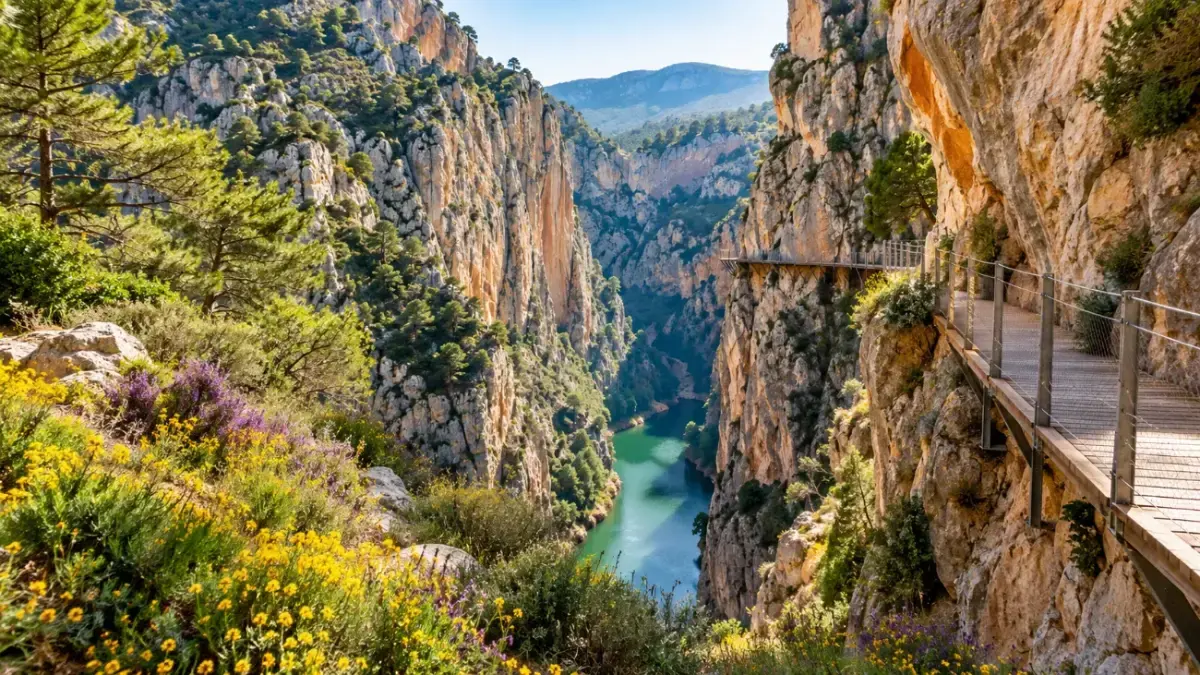
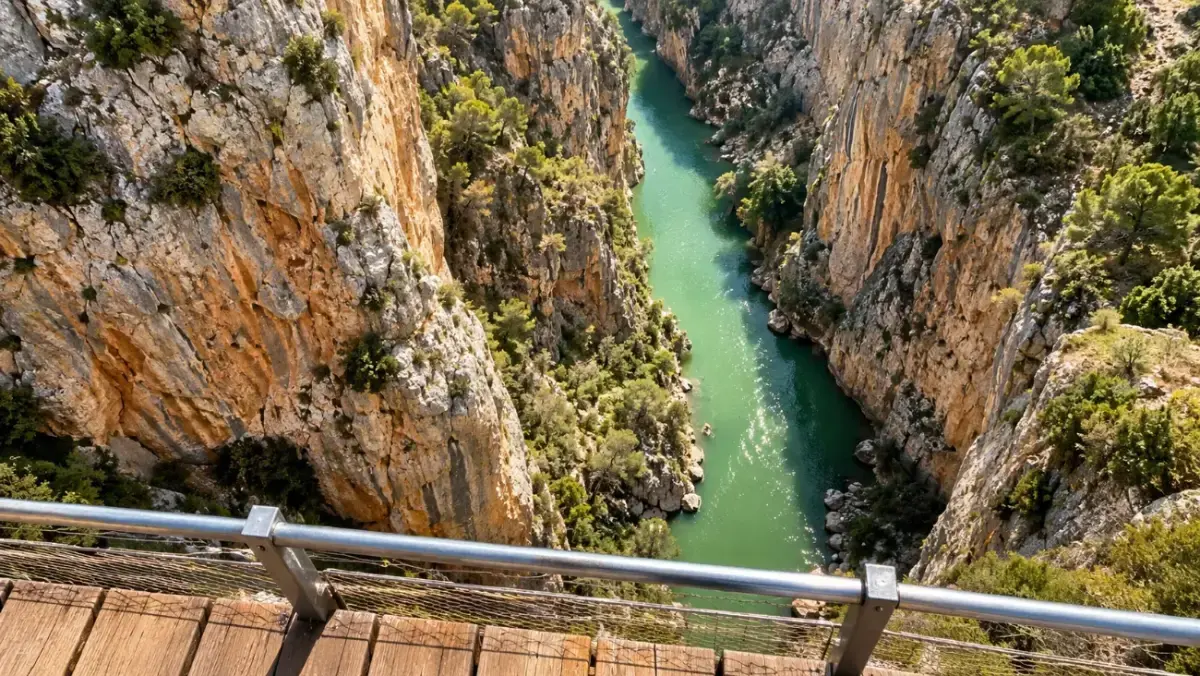
The famous cantilevered section hangs 105 metres above the ground, Canal Sur reports, and the walkway is about a metre wide. The drop side has railings. You walk on wooden boards fixed to the rock, with the cliff on one side and air on the other.
Much of the 7.7 km is not like that at all. The access paths are forest tracks and a tunnel, and the Valle del Hoyo in the middle is an open valley on flat ground. The exposed parts come in stretches, so you get breaks.
A guest on the El Chorro guided tour put it this way: she conquered her fear of heights and called it the most amazing experience. That is a common story. It is not a promise.
Why was it called the world's most dangerous path?
Because the old path had crumbled. Several people died in 1999 and 2000, and the access was closed in 2001.
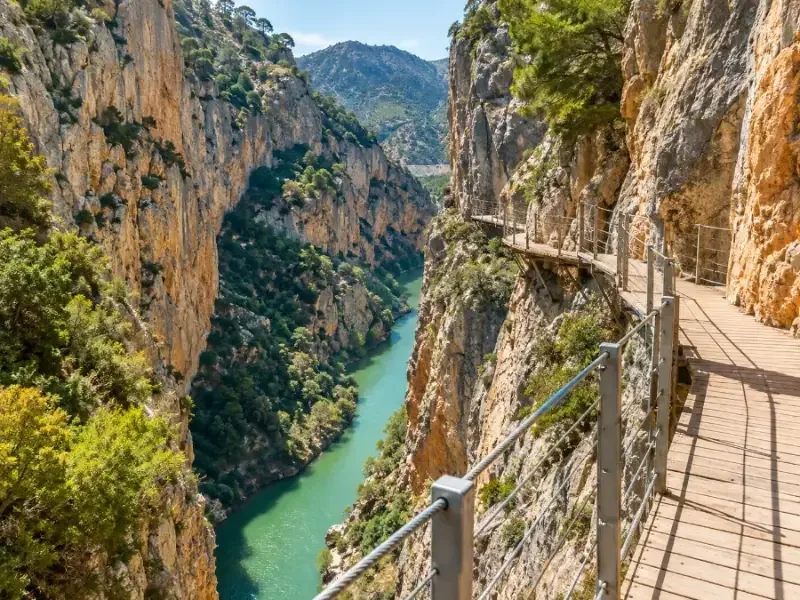
The first path was built between 1901 and 1905 for workers at the hydroelectric plants: a narrow concrete deck on steel rails, held up by supports set into the rock. King Alfonso XIII walked it in 1921, which gave the Caminito its name. Maintenance stopped, and by the 1990s most handrails were gone and whole sections had fallen away, according to Wikipedia.
After several deaths in 1999 and 2000, the Junta de Andalucía closed the accesses in 2001 and demolished the start. Works on the new boardwalk began in 2014, and it opened on 28 March 2015. The old path is still there, below the new one, and it is the best argument for the modern version.
How safe is the Caminito del Rey today?
Safe for normally fit people who follow the rules. It is not risk-free, and the official papers say so.
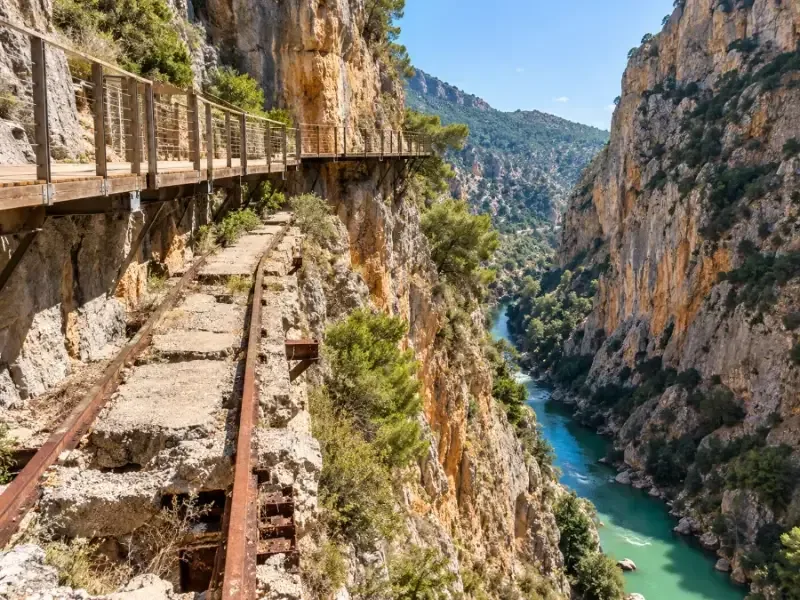
The official risk sheet lists what is in place: at least 10 control staff along the route, guards at the entry and exit, cameras, defibrillators and a daily inspection before opening. Every visitor wears a helmet from the entrance to the exit. The route closes for strong wind, heavy rain or extreme heat.
The same sheet is honest about what remains. Small rockfalls can happen, which is why helmets are compulsory and why you should not stop in the areas signed in orange. The path is earth, boards, ramps and stairs, and it can be slippery. The emergency number is 112.
Guides in five languages and the shuttle to the north gate included, starting by El Chorro station.
Book thisWhich parts of the Caminito del Rey feel the most exposed?
The first cliff boardwalk, the glass balcony, the hanging footbridge and the new suspension bridge.
Going north to south, these are the moments that test nerves. The heights come from the official FAQ and the bridge reports in the press:
| Part of the route | What makes it airy | Can you avoid it? |
|---|---|---|
| Boardwalk in the Gaitanejo gorge | The first long stretch fixed to the cliff | No, it is the route |
| Glass-floored balcony | You look through the floor | Yes, it is a viewpoint beside the path |
| Hanging footbridge on the original route | 105 m above the gorge, open to the air | No, if you take the original route |
| New suspension bridge (June 2026) | 110 m long and up to 50 m high | Yes, the previous final stretch remains open |
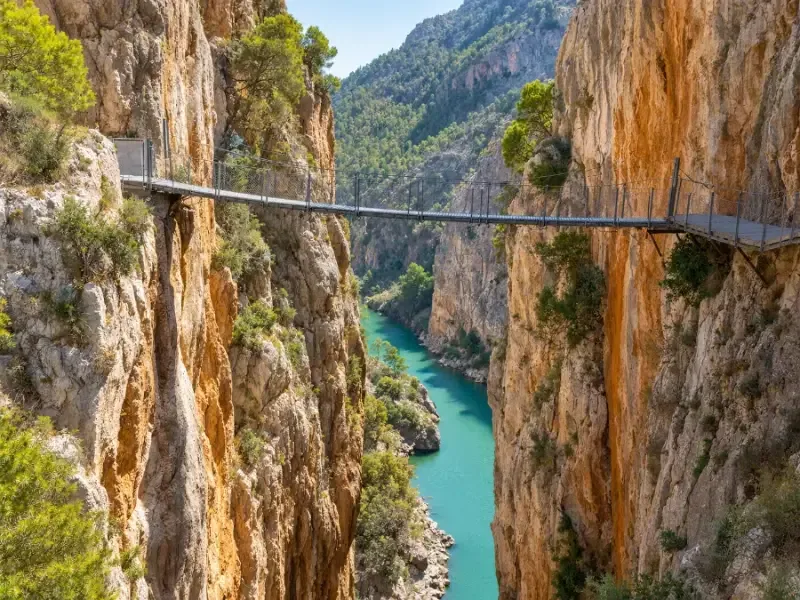
The official recommendations name the hanging bridge in the southern part as a reason the route may not suit people with vertigo. Wind closes it: the FAQ says strong wind shuts the hanging bridge near Álora. The new bridge is covered in our post on the 110-metre bridge.
Can you do the Caminito del Rey if you are scared of heights?
With a mild fear, usually yes. With vertigo, the official advice is not to go.
There is a difference between disliking heights and vertigo. The official recommendations say people with vertigo should not visit. A mild fear is another matter. What helps:
- Keep to the wall side and look at the path ahead or the rock face, not straight down.
- Go with a guide. Walking behind someone calm, with a voice in your ear, takes the edge off. The guided tour with entry uses radio headsets.
- Pick a quiet slot. Fewer people behind you means less pressure to keep up.
- Skip the glass balcony if it does nothing for you.
- Let faster walkers pass at wider points and take your time.
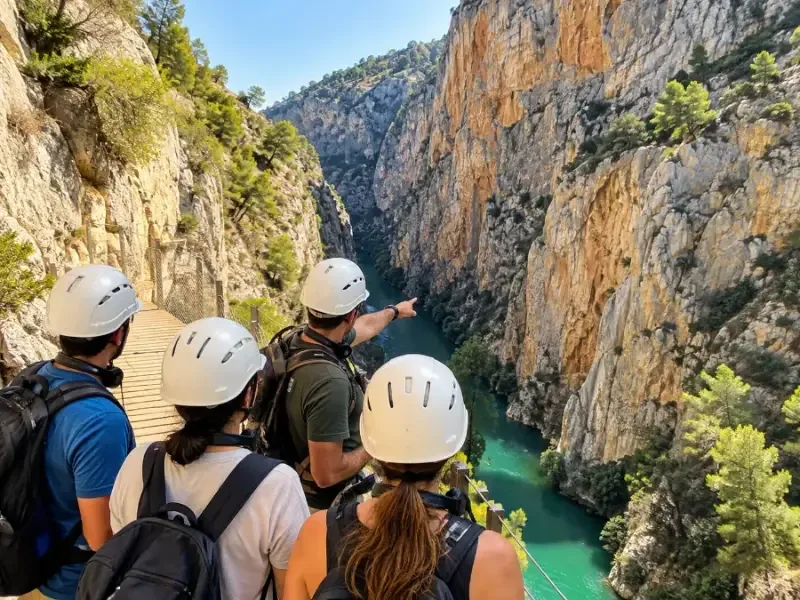
A calm guide in front and their voice in a headset: the easiest way through if heights make you nervous.
Book this Tour detailsCan you turn back once you start?
Do not plan on it. The route is one way, downhill, with access from the north only, so make your decision at the gate.
The rules set a single direction, north to south, and allow only the approved areas. The official pages say nothing about walking back against the flow, and on a narrow boardwalk with waves of walkers coming behind you it would be hard anyway. If something goes wrong, tell the control staff. That is what they are there for.
The access paths before the control booth are the place to test yourself. If the tunnel and the forest path already feel bad, talk to the staff before you collect your helmet.
Is the Caminito del Rey safe for kids?
For children aged 8 and over who are steady on their feet, yes. Under 8s are not allowed, and you cannot carry anyone.
The prohibitions list bans children under 8 and carrying anyone in your arms on the boardwalks. Walkers aged 8 to 17 must be with an adult and carry proof of age, such as a passport or an ID card. Prams and strollers are not allowed either.
Think about your child, not the rule. A 9-year-old who loves climbing frames will probably be fine. One who freezes on a high bridge has three to four hours of route ahead and no turning back.
How hard is the Caminito del Rey physically?
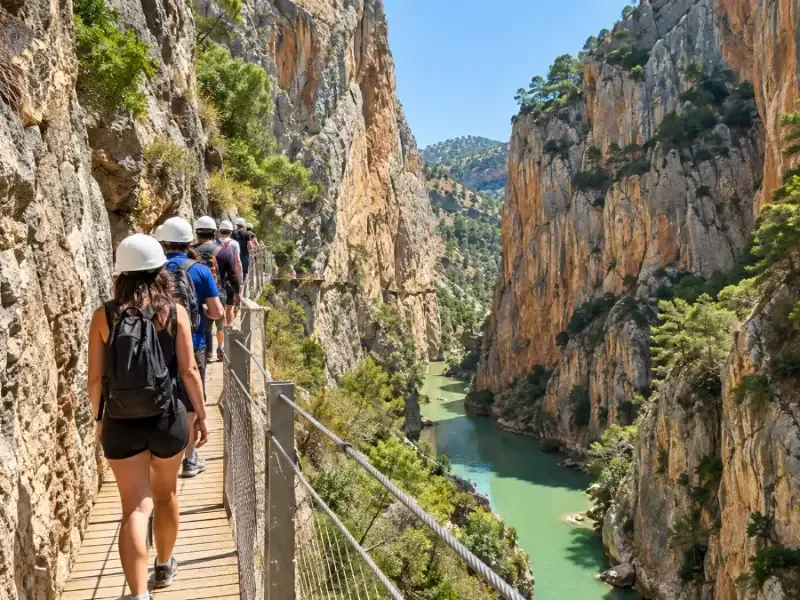
Not hard. It is 7.7 km, mostly downhill, with some stairs and short climbs. It needs normal fitness, not hiking experience.
The official FAQ gives 7.7 km and three to four hours, mostly downhill. The risk sheet mentions some uphill sections and stairs and a drop of about 150 metres from start to finish. You need some effort and balance, the official pages say, but it is no athletic challenge.
Who should skip it: people with heart or breathing conditions, people under medical treatment and anyone who needs a wheelchair, crutches or walking poles, all of which are banned on the route. The what to wear guide covers the shoes that make the stairs easier.
Official guides trained in first aid, with groups split by language, meeting at El Kiosko.
Book thisFrequently asked questions
Is the Caminito del Rey dangerous?
Not in its current form. The old path, where several people died in 1999 and 2000, was replaced in 2015 by a fenced boardwalk with compulsory helmets, staff and cameras.
Is the Caminito del Rey OK for people with a fear of heights?
With a mild fear, most people manage, especially with a guide. People with vertigo are officially advised not to visit.
How high is the Caminito del Rey?
The cantilevered section and the hanging footbridge are about 105 metres above the gorge. The new suspension bridge is up to 50 metres high.
Is the Caminito del Rey flat?
No, but it is mostly downhill, with a drop of about 150 metres from start to finish and some stairs and short climbs.
Ready to book
Choose your tour
Free cancellation up to 24 hours before on every option, and live availability on the booking page.
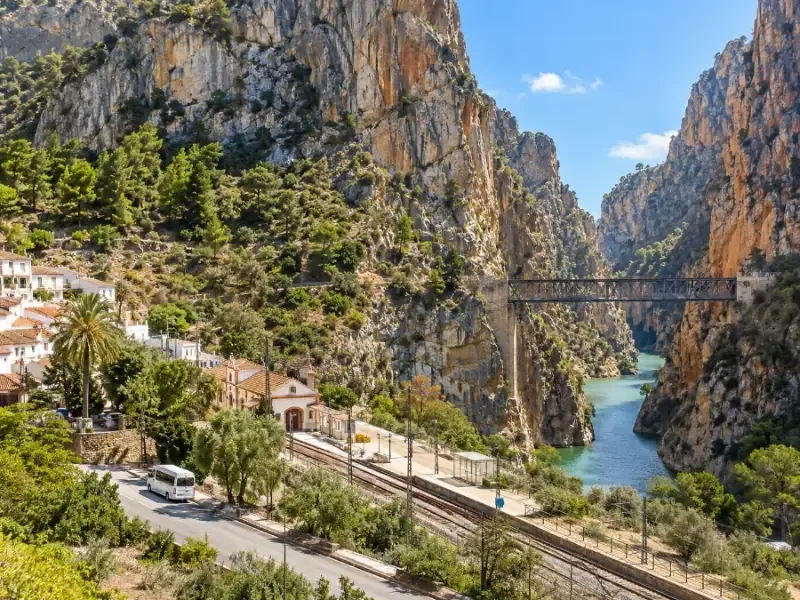
Tickets, Guided Tour, Shuttle & Water
Start and finish by El Chorro station, shuttle included, five guide languages
Guided Tour and Entry Ticket
- Entry ticket for a set time slot
- Live guide in English or Spanish
- Helmet and radio headset
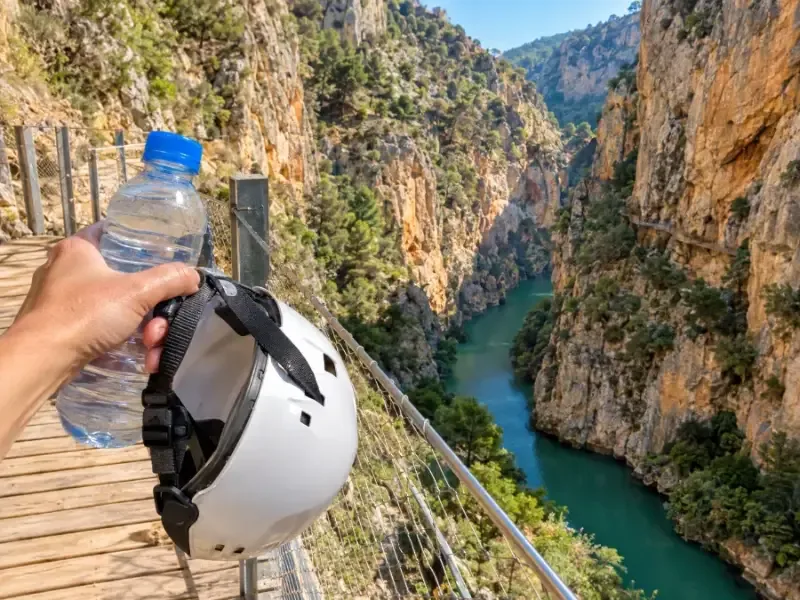
Tour with Official Guide and Drink
Official guides trained in first aid, groups split by language