Booking choice: The Caminito del Rey entry ticket, 3 to 4 hours. Book this Tour details
The Caminito del Rey is run under a concession: the Diputación de Málaga owns it, and a private consortium (today the UTE of Sando, Salzillo Servicios Integrales and Mundo Management) operates it. The next contract is meant to cover 2027 to 2036. On 18 March 2026 the Diputación's plenary approved the economic feasibility study for it, and the document went out for public information.
Everything below comes from that study as reported by El Español. It is a proposal. The tender documents, the winning bid and the final rules can all differ, and we found no newer official announcement about the tender.
The quick answer
The study for the 2027-2036 concession proposes a cap of 1,500 visitors a day, guided visits rising to about 70 per cent of all visits, a package of works (bridges, a visitor canal-tunnel, the Casa del Hoyo, parking and bus stops, water and wastewater) and a price rise after ten years of frozen prices. It is a proposal, not a rule. Tickets now on sale run to 2 May 2027 under the current terms.
What is changing at the Caminito del Rey in 2027?
Probably the contract that runs it. A new ten-year concession is planned for 2027 to 2036, and its feasibility study sets out the cap, the guided share, the works and the prices.
Concessions are how the Diputación runs the site day to day: the operator sells the tickets, staffs the route and maintains it, and pays a fee and reinvests part of the income. The new bridge that opened in June 2026 was paid for that way, from the Caminito's own revenue, as our post on the bridge explains.
The feasibility study is the first formal step. According to El Español, the plenary approved it and put it out for public information. The next steps are the tender documents (the pliegos), which fix the award criteria and operating details, then the tender itself and the award. The report gives no dates for those stages.
Will there be a daily visitor limit?
The study proposes a cap of 1,500 visitors a day. It says the site reached its maximum capacity in January 2025, given the infrastructure around it.
Today the Caminito takes groups every ten minutes and receives about 330,000 visitors a year, according to the Diputación. The study counts more than 3.28 million tickets sold between 2016 and 2025, and argues the route is now at its limit for roads, parking and services.
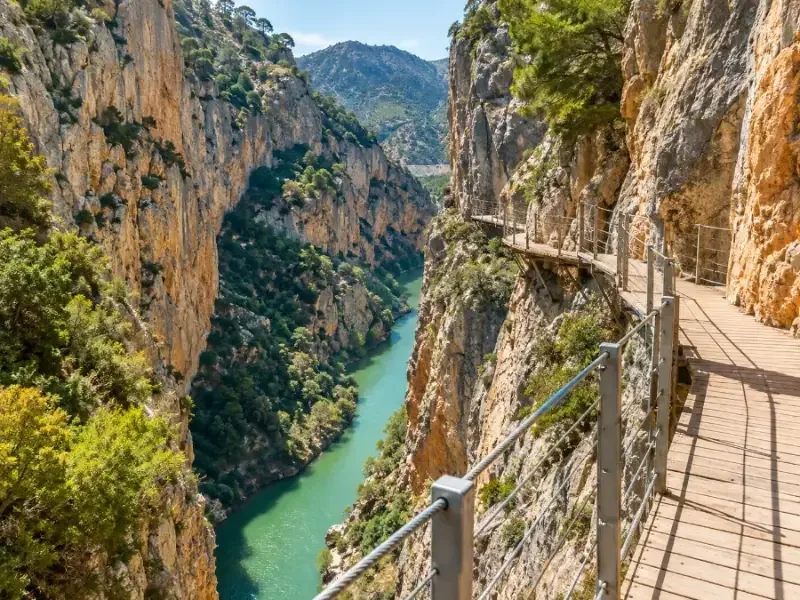
The proposed cap is 1,500 visitors a day, set, in the study's words, to preserve the experience and avoid overcrowding. It is not fixed for ever: changing it would need the Diputación, its monitoring committee and the management of the protected natural area to agree. For walkers, a cap mostly means one thing. The days that sell out today would sell out the same way, and any growth in demand would show up as more sold-out dates, not more crowded boardwalks.
Already have your dates? The plain entry ticket is all a driver needs: walk at your own pace with staff along the route.
Book thisWill more visits be guided?
Yes, if the proposal goes ahead. Guided visits would rise to about 70 per cent of all visits, mainly for safety reasons.
This is the change independent walkers should watch. The study wants guided visits to reach 70 per cent of the total, against 30 per cent individual access: roughly seven visits in ten with a guide. El Español's report links the shift mainly to safety. It does not give today's split.
The study does not say how the slots would be split, or whether walkers without a guide would get fewer time slots. Our reading: if the proposal survives the tender, plain entry tickets could become the scarce product. For now nothing has changed, and our guide to walking without a guide still applies. If you want a guide anyway, the guided tour with entry ticket runs in English and Spanish, and the accredited guided tour offers six languages, Dutch included.
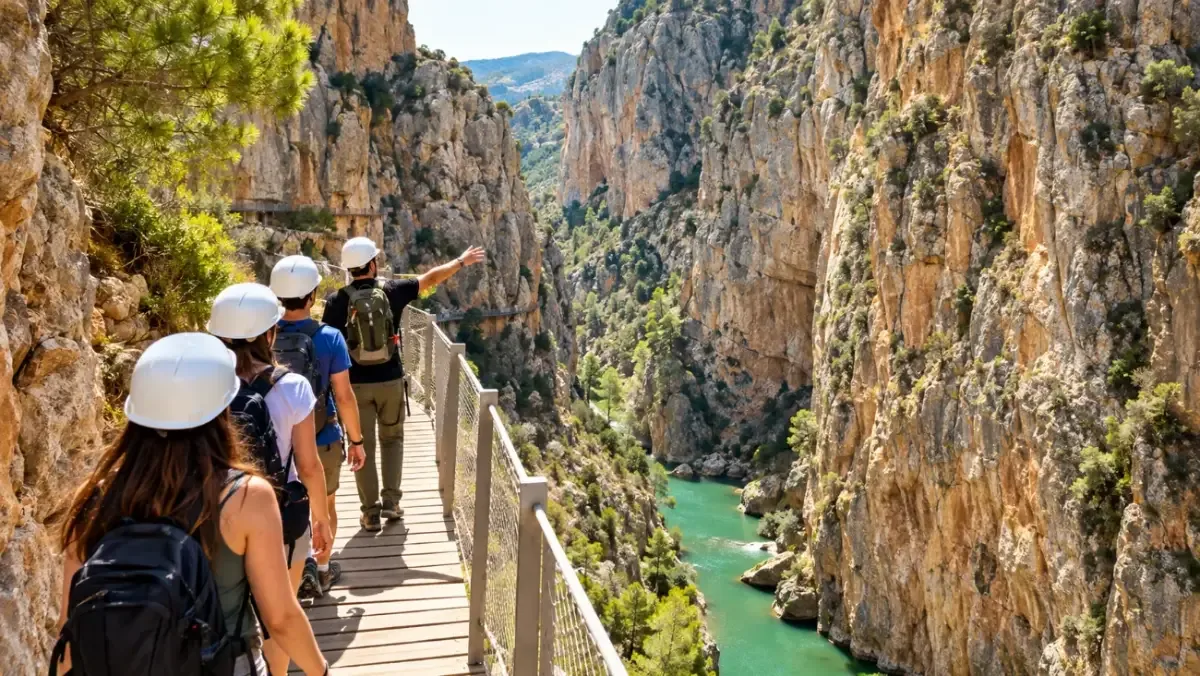
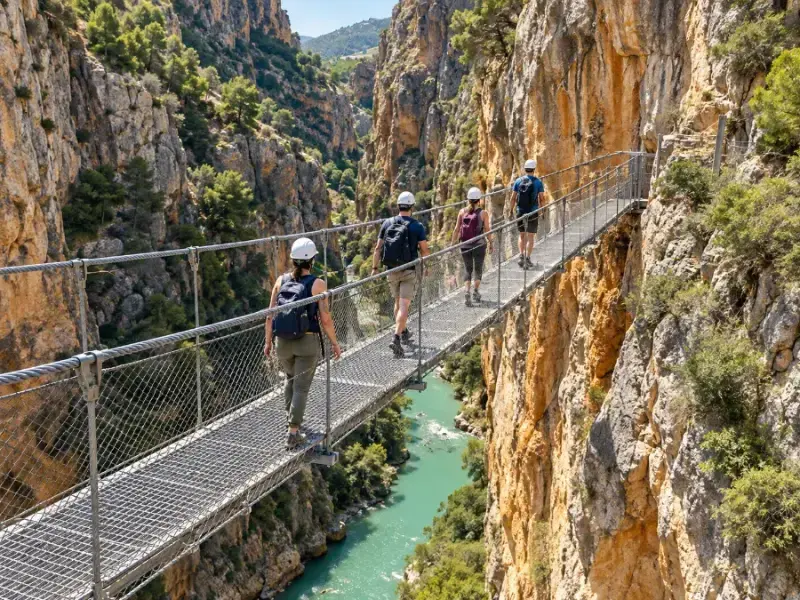
An accredited guide in Dutch, German, French, Italian, English or Spanish, as a small group or private.
Book this Tour detailsWhat works are planned for the Caminito del Rey?
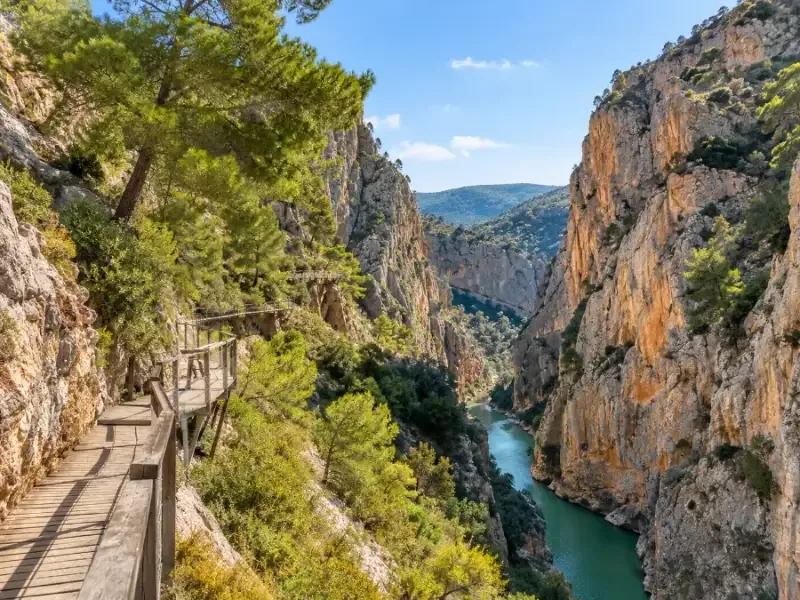
A package of works written into the contract: bridges including the Puente del Rey and an emergency bridge, a canal-tunnel for visitors, the Casa del Hoyo, parking and bus stops, and water and wastewater works in El Chorro.
The study criticises the past decade for investing without a specific plan, and ties the next round of work to the contract instead. These are the items El Español lists. The report names them but does not describe the designs, so we do not guess at how they will look.
| Planned work | What the study says |
|---|---|
| Bridges | Several, including the Puente del Rey and an emergency bridge |
| Canal-tunnel | Adapted for visitors to pass through |
| Casa del Hoyo | Enhancement of the building |
| Access near the hermitage | Improvements to the access area |
| Parking and bus stops | New or improved car parks and stops |
| El Chorro water works | A wastewater treatment plant and a new drinking water network |
| Control systems | 58 cameras and three control points |
Will Caminito del Rey tickets cost more from 2027?
The study proposes a price rise, followed by reviews every two years. Prices have not changed for about ten years, and the tickets on sale now keep the current prices.
This is the part that made the headlines. The study proposes an initial price rise for both the general entry and the guided visit, then further rises reviewed every two years. The booking fee would stay as it is. The argument is that prices have been frozen for a decade and were not indexed to inflation.
Two points keep this in proportion. It is a proposal, and the final prices will be set when the contract is awarded. And the current block, from 7 December 2026 to 2 May 2027, went on sale at the same prices as before. If you are planning a visit for winter or early spring, nothing changes for you. Our post on winter tickets has the details.
When will the changes happen, and what should you do now?
Not before the new contract is awarded, and no date has been announced. Book as normal on the current terms, and check the official site before each new release.
The new concession is meant to start in 2027, but the tender, the award and the final rules are still ahead. Until then the current operator runs the site, and the official rules are the ones that apply: minimum age 8, ID for everyone, helmets on, closed on Mondays.
Practical advice: if you were planning to come in the next year anyway, book from the current block or the next one. If you like walking at your own pace without a guide, this is a good time to do it. And if a cap and a guided majority do arrive, expect plain entry dates to sell even faster than they do now. We will update this post when the tender is published.
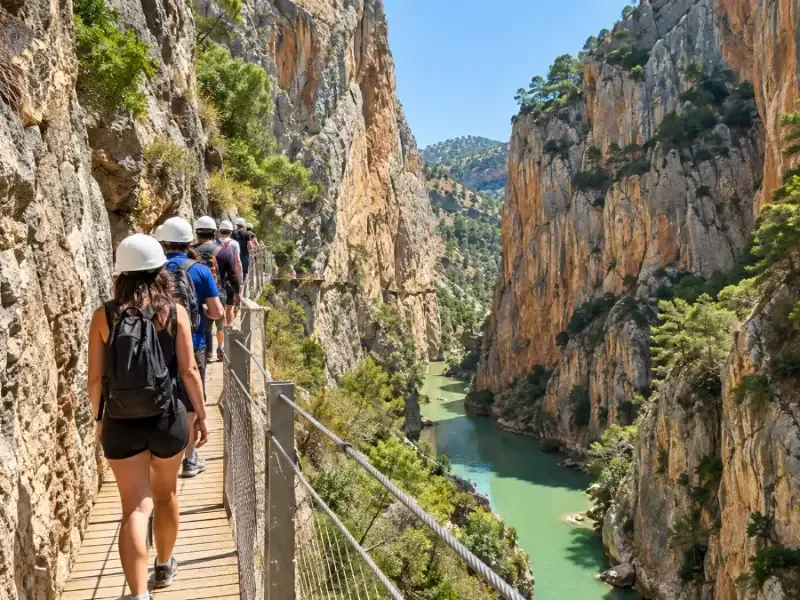
Walk the gorge at your own pace, on the current terms: the plain entry ticket with a timed slot.
Book thisFrequently asked questions
Is the Caminito del Rey getting a visitor limit?
A cap of 1,500 visitors a day is proposed in the feasibility study for the 2027-2036 concession. It is a proposal and is not in force.
Will Caminito del Rey tickets go up in price?
The feasibility study proposes a price rise from the new concession, then reviews every two years. Tickets on sale for 7 December 2026 to 2 May 2027 keep the current prices.
Will I need a guide from 2027?
Not necessarily. The study proposes that about 70 per cent of visits be guided, which leaves room for general entry. The final split depends on the tender.
Who runs the Caminito del Rey?
The Diputación de Málaga owns and oversees it. Day-to-day management is a concession, currently held by the UTE of Sando, Salzillo Servicios Integrales and Mundo Management.
Ready to book
Choose your tour
Free cancellation up to 24 hours before on every option, and live availability on the booking page.
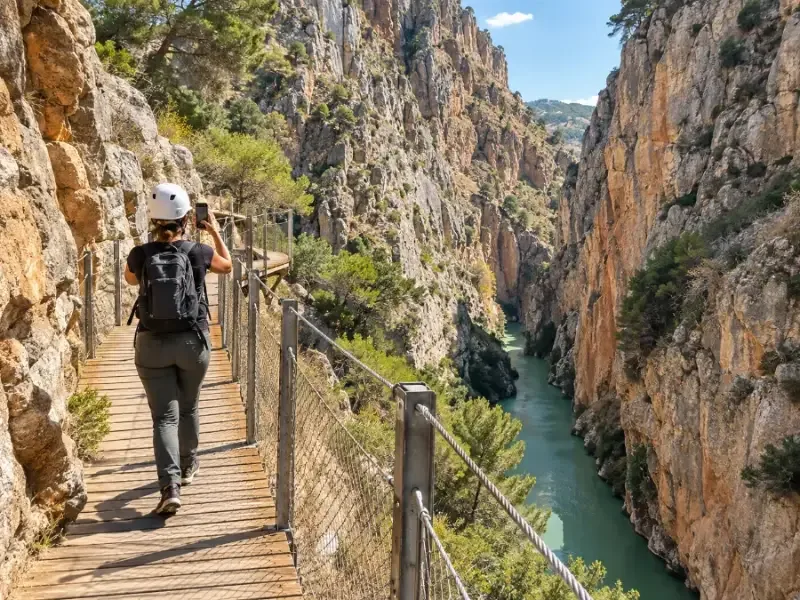
Caminito del Rey Entry Ticket
- Entry ticket for a set time slot
- Helmet at the entrance
- Walk without a guide, at your own pace
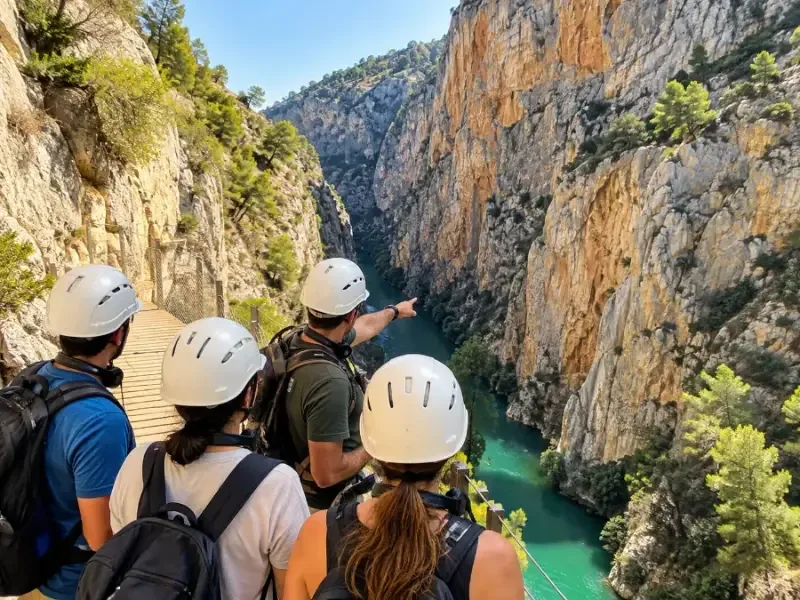
Guided Tour and Entry Ticket
- Entry ticket for a set time slot
- Live guide in English or Spanish
- Helmet and radio headset
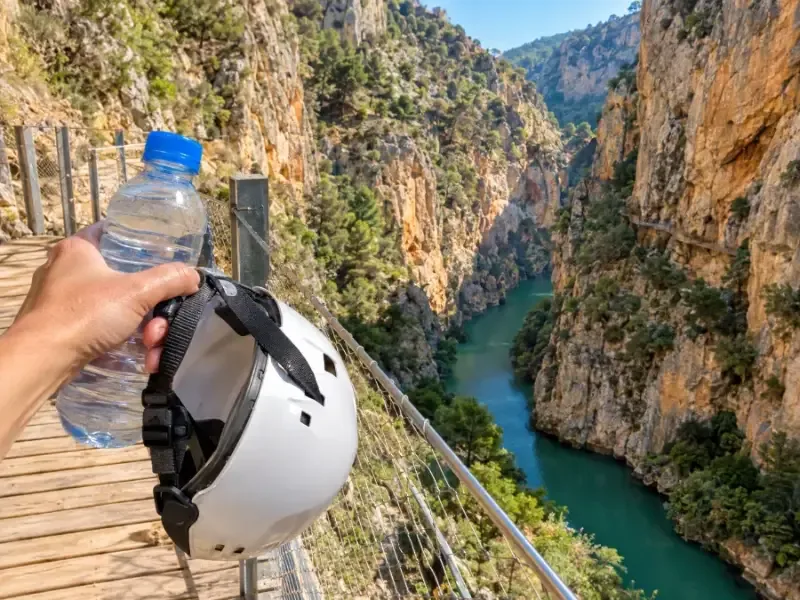
Tour with Official Guide and Drink
Official guides trained in first aid, groups split by language